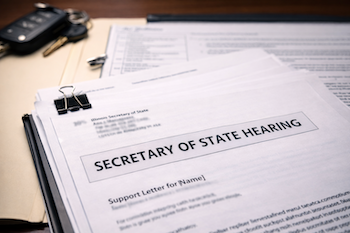
 Support letters play a crucial role in Illinois driver's license reinstatement hearings, providing personal testimony to demonstrate your rehabilitation, stability, and low risk to public safety after a DUI or serious traffic revocation. As a Joliet driver's license reinstatement attorney with over 20 years of experience, including my time as a former Will County prosecutor, I've seen how well-crafted letters can tip the scales toward approval for Restricted Driving Permits (RDPs) or full reinstatement.
At the Law Office of Jack L. Zaremba, we guide clients through gathering and presenting these letters effectively in Secretary of State hearings for Will County residents. In this blog post, we'll explore why support letters matter, how to prepare them for 2026 hearings, common pitfalls, and strategies to strengthen your petition. For related topics, see our guide on appealing a denied hearing .
Why Support Letters Are Essential in Reinstatement Hearings
Support letters, also known as character references, are written statements from family, friends, employers, or community members corroborating your sobriety, responsibility, and positive changes since your offense. Under 92 Ill. Admin. Code 1001, the Secretary of State evaluates these alongside your Uniform Report, treatment records, and testimony to assess if reinstatement poses a safety risk.
In Will County cases, especially for high-risk classifications (they are required), letters help humanize your petition, showing stable employment, family support, or community involvement—key factors in overcoming denials based on insufficient evidence of rehabilitation.
How to Prepare Effective Support Letters
Strong letters should be specific, dated, and address your history, changes, and future plans without minimizing the offense. Key tips:
- Choose Writers Wisely: Select 3 people who know you well (non-family for variety) and can speak to your abstinence and character.
- Content Guidelines: Include details like how long they've known you, observed sobriety, and why you're low-risk; avoid generic praise.
- Format and Submission: Use state forms, sign originals, and submit with your petition—virtual hearings in 2026 allow Docusign copies.
In Joliet hearings, we've used targeted letters to counter high-risk evaluations, securing RDPs for work needs.
Common Pitfalls and How to Avoid Them
Pitfalls include vague content, outdated letters (over 45 days old), or inconsistencies with your testimony, leading to credibility issues and denials. Will County applicants often fail to review these letters for compliance.
Avoid these by reviewing letters for specificity, ensuring they match your Uniform Report, and updating them before re-hearings.
Strategies to Strengthen Your Case with Support Letters
To maximize impact:
- Tailor to Your Classification: For high-risk, emphasize long-term sobriety support.
- Combine with Evidence: Pair letters with AA forms or employer verifications if required.
- Practice Integration: Reference letters in your testimony for cohesion.
- Seek Professional Review: Have an attorney edit for compliance.
Our firm has turned weak petitions into approvals by refining support letters.
Why Hire an Experienced Reinstatement Attorney?
Hearings demand precise presentation; poor letters can doom your case. As a former prosecutor, I understand Secretary of State expectations, crafting petitions that highlight strengths.
If preparing support letters for a reinstatement hearing in Will County, contact the Law Office of Jack L. Zaremba for a free, confidential consultation. Visit our contact page or call our Joliet office to boost your chances in 2026. Your path to reinstatement starts with strong support.